
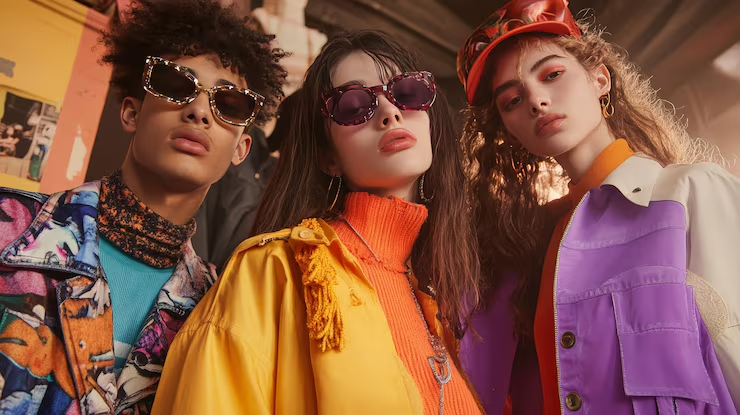

The global fashion landscape has historically operated on a rigid top-down model. For decades, major luxury design houses and mass-market retail conglomerates dictated what consumers would wear each season. Trends were carefully orchestrated months in advance, moving predictably from high-end European runways down to department store racks. Consumers were largely passive buyers, expected to refresh their wardrobes regularly according to strict seasonal cycles.
Generation Z has completely shattered this traditional playbook. Born roughly between 1997 and 2012, this demographic is driven by a digital-first mindset, profound ecological awareness, and an intense desire for radical personal authenticity. Rather than accepting standardized aesthetic rules, younger consumers view clothing as a dynamic medium for social commentary, identity exploration, and individual storytelling. As their economic influence expands globally, the entire fashion ecosystem is scrambling to adapt to a consumer base that values personal ethos and fluidity over corporate prestige.
The Shift From Trend Following to Hyper-Individuality
In previous eras, looking stylish often meant conforming to a collective look defined by a specific decade or brand movement. Millennial minimalism, characterized by neutral palettes and predictable capsule wardrobes, prioritized neatness and cohesion. Gen Z has decisively flipped this script in favor of hyper-individuality and eclectic self-expression.
Street style today is defined by an intentional collision of contrasting elements. It is entirely normal to see a vintage leather blazer paired with athletic sneakers, or a piece of luxury streetwear mixed with a thrifted staple item. This collage-like approach to dressing relies heavily on the mixing of micro-trends sourced from online communities.
-
Aesthetic Fluidity: Rather than committing to a single style, young consumers transition seamlessly between distinct subcultures—such as grunge, vintage nostalgia, maximalist prints, and tech-wear—often within the same week.
-
Rejection of Seasonal Rules: Traditional rules regarding color palettes or garment pairings have lost authority. Bright neon accessories are worn during winter, and heavy winter boots appear alongside summer slip dresses.
-
The Power of Curation: Style is no longer measured by how much money is spent on a brand-new outfit, but rather by the skill involved in curating unique vintage finds into a cohesive personal statement.
The Mainstreaming of Sustainable and Circular Fashion
Perhaps the most structural change driven by younger buyers is the normalization of secondhand shopping. While previous generations often viewed thrifting as a necessity born of budget constraints, Gen Z treats pre-loved shopping as a first-choice destination.
Platforms dedicated to resale and peer-to-peer clothing exchange have transformed thrift culture into a multi-billion-dollar global movement. This behavioral shift stems from a deep-seated anxiety regarding the environmental toll of traditional manufacturing. Fast fashion models, characterized by rapid production cycles and excessive textile waste, face fierce backlash from eco-conscious youth.
-
Secondhand First: A substantial portion of the younger demographic allocates their apparel budgets toward vintage markets, charity shops, and online resale applications before ever considering brand-new retail items.
-
Upcycling Culture: Creative modification has replaced passive consumption. Restyling old garments through patchworking, custom embroidery, and DIY tailoring allows individuals to wear pieces that literally no one else owns.
-
Radical Transparency: Brands can no longer rely on vague marketing claims about green initiatives. Young buyers demand proof of ethical labor practices, organic material sourcing, and supply chain accountability.
Blurring Gender Boundaries in Retail Design
For generations, physical retail stores and e-commerce websites were strictly partitioned into men’s and women’s sections, enforcing binary standards of cut, color, and fabric. Gen Z has actively dismantled this structural barrier, demanding a gender-fluid approach to everyday clothing.
Unisex dressing has evolved far beyond the basic oversized hoodie. Modern gender-neutral fashion focuses on relaxed silhouettes, adaptive tailoring, and neutral sizing scales that accommodate diverse body types. Men are increasingly incorporating skirts, pearls, floral prints, and fluid draping into their wardrobes, while women frequently shop in the men’s section for oversized structural blazers and wide-leg trousers.
Retailers have been forced to rethink store layouts and collection naming conventions. The success of gender-neutral capsules in major department stores proves that consumers prefer shopping by aesthetic and comfort rather than traditional gender categorization.
Digital Identity and the Influence of Social Platforms
Fashion no longer exists purely in the physical realm. For a generation raised on smartphones and high-speed internet, digital identity carries just as much weight as physical appearance. Social media algorithms and short-form video platforms function as the modern runway, setting trends at lightning speed.
This digital saturation has fundamentally altered how clothing is consumed and evaluated.
-
Virtual Try-Ons and AR: Digital innovation allows shoppers to preview clothing through augmented reality, bridging the gap between online browsing and physical reality.
-
Community-Led Design: Instead of relying on traditional creative directors to dictate styles, brands now look to viral online creators, micro-influencers, and comment sections to gauge consumer desire.
-
The Outfit-Repeater Stigma: Driven by digital documentation, younger consumers have historically feared being seen in the same outfit twice online. However, this is shifting toward a badge of honor centered on creative rewearing, where styling an archival piece in multiple distinct ways demonstrates fashion intelligence.
The Pressure on Legacy Brands to Adapt
Traditional fashion houses that built their reputations on exclusivity, seasonal drops, and rigid marketing strategies face an existential crisis. Brands that fail to engage authentically with youth values quickly find themselves alienated from the cultural conversation.
Corporate virtue signaling or superficial trend-chasing is easily spotted and rejected by savvy young digital natives. To maintain relevance, heritage brands must forge genuine partnerships with independent creators, embrace sustainable production methods, and loosen their control over how garments are styled. The modern consumer does not want to be told how to wear a brand; they want the brand to serve as a canvas for their own creativity.
Frequently Asked Questions
How does Gen Z view luxury fashion compared to older generations?
Older generations often viewed luxury through the lens of prominent logos, status symbols, and price prestige. Gen Z tends to view luxury with a sense of irony or skepticism. They prefer understated archival pieces, independent designer labels, or vintage luxury items that carry a unique history rather than loud display logos.
What role do online resale apps play in modern wardrobe building?
Resale applications serve as primary retail destinations rather than alternative options. Platforms allow users to buy, sell, and trade garments globally, making rare vintage items easily accessible and supporting a circular economy that reduces textile waste.
Why is comfort prioritized over traditional formal wear in youth culture?
Growing up during periods of remote learning, flexible work environments, and digital-first communication shaped a preference for tactile ease. Structured discomfort is increasingly rejected in favor of relaxed tailoring, stretch fabrics, and athleisure elements that transition smoothly from home to social settings.
How do micro-trends impact the sustainability habits of young consumers?
The rapid cycle of internet micro-trends creates tension with eco-conscious values. While digital culture encourages fast aesthetic turnover, many young shoppers reconcile this by sourcing their micro-trend items exclusively through secondhand markets or by upcycling existing wardrobe pieces to minimize environmental impact.
In what ways has body positivity influenced modern clothing cuts?
The demand for inclusive sizing and body-positive representation has forced brands to expand beyond narrow sizing models. Gen Z favors relaxed fits, stretchy textiles, and adjustable silhouettes that look flattering and feel comfortable across a diverse range of body shapes rather than forcing bodies to fit a narrow standard.
How do digital avatars and gaming skins influence real-world style?
Virtual fashion and digital clothing worn by online avatars allow users to experiment with avant-garde shapes, wild colors, and surreal textures that might be impractical or unavailable in the physical world. This digital experimentation frequently bleeds over into real-world styling choices, encouraging bolder physical outfits.

Comments are closed.