
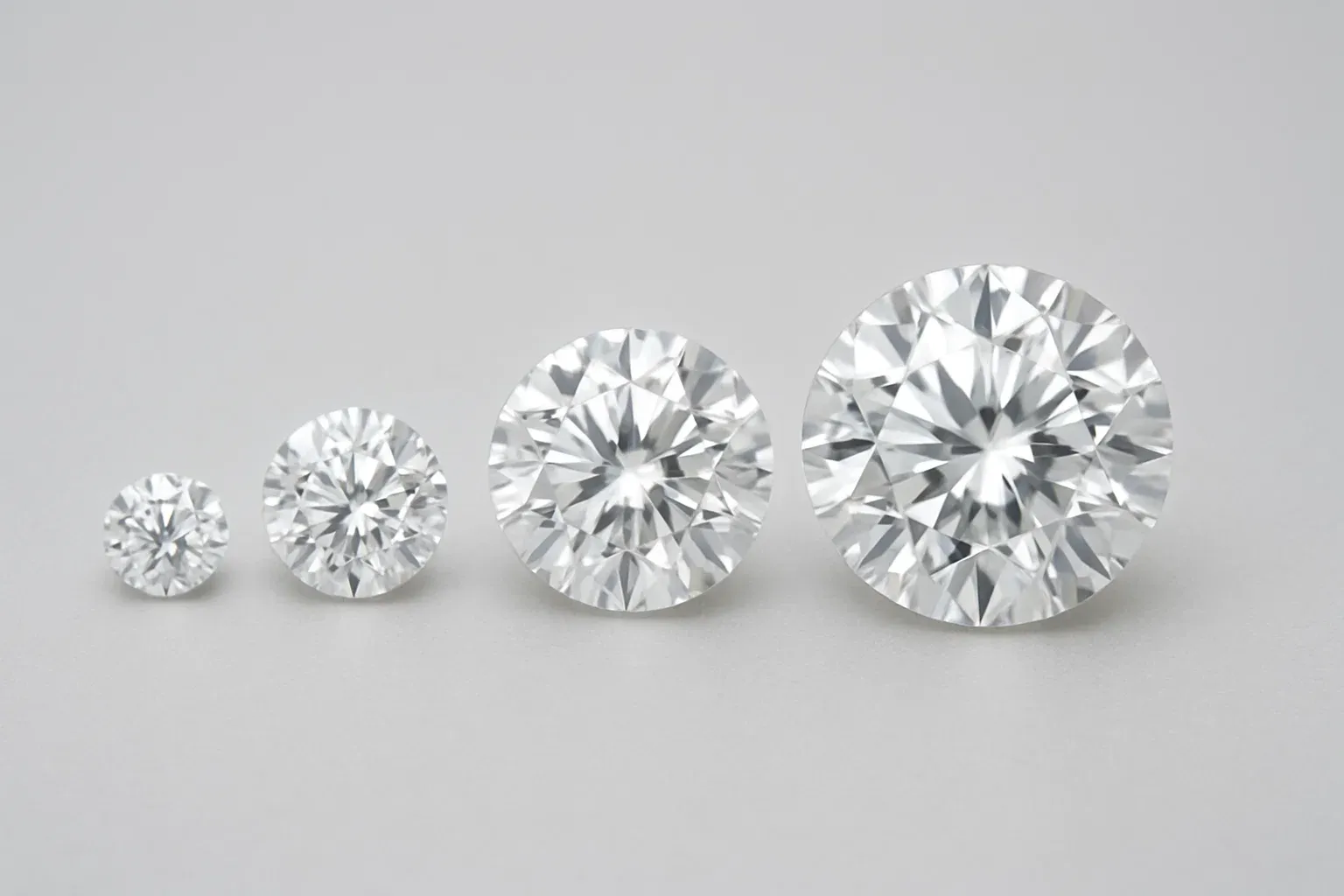

When purchasing a diamond, understanding carat weight is one of the most practical ways to find the ideal piece for your budget. However, it also requires careful consideration of the overall quality, proportion and your personal style.
This guide explains diamond carat weight and shares practical tips to discover the right balance between size and value.
All About Carat Weight of a Diamond
Diamond carat refers to the weight of a diamond, not its size. One carat equals 0.200 grams and is divided into 100 points. For example, a 0.50-carat diamond weighs 0.100 grams or 50 points. Jewellers use precise scales to measure carat weight accurately.
A higher carat doesn’t always imply a massive diamond. While carat weight influences size, the diamond’s shape, cut and proportions also influence how large it appears. Two diamonds with the same carat weight can look different depending on how they are cut.
The right choice depends on your budget, personal preferences and the type of jewellery you want. Some people prefer a modest carat weight with higher colour and clarity while others prioritise a larger diamond with balanced quality.
How to Choose the Right Diamond Carat for Size and Value
Set Your Budget
Establishing a clear spending limit is the first step when selecting a diamond. Prices increase as carat weight goes up because larger natural diamonds are rarer. Since the visual difference between these weights is often unnoticeable to the eye, choosing a weight just below full carat marks, like 0.90 carats, leads to significant cost savings.
Match Your Lifestyle
Your day-to-day activities play a major role in deciding on the right carat weight. Smaller diamonds are convenient for hands-on professions, sports and active routines. Larger diamonds make a prominent statement and can be reserved for special moments. Selecting a size that fits comfortably into your routine ensures your jewellery stays secure.
Consider Natural Features
Natural inclusions and colour variations occur organically within diamonds as they form beneath the earth over billions of years.
Larger carat sizes tend to make these internal characteristics slightly more visible. Choosing a higher clarity grade becomes more helpful when you select a bigger diamond.
Smaller diamonds can easily keep minor inclusions discreet while maintaining a clean appearance.
Balance the Four Cs
Carat weight is only one part of the overall quality of a diamond. The remaining factors include cut, colour and clarity, which together enhance overall sparkle.
Prioritising cut quality allows a diamond to reflect light beautifully and appear vibrant. Overemphasising carat weight while ignoring cut can compromise the beauty of the diamond. Balancing all four elements helps you achieve optimal value without sacrificing visual appearance.
Prioritise Visual Size
The physical dimensions of a diamond often differ from its actual weight on a scale. Elongated shapes such as oval, marquise or pear cuts naturally appear larger than round brilliants of the same weight.
A well-proportioned cut spreads weight across the top surface to maximise visual impact while maintaining your budget. Selecting a shape with extended proportions gives you a larger look without increasing carat weight.
Choose Natural Diamonds
Natural diamonds offer a unique connection to Earth’s history, formed deep underground over billions of years. This gives each diamond a distinct identity, with no two natural diamonds being alike.
Selecting such a diamond offers natural rarity and lasting appeal for years to come.
Summing Up
The ideal diamond carat balances size, quality and personal preference. When chosen thoughtfully, it becomes a natural reflection of your style and a piece you will enjoy wearing over time.

Comments are closed.